Five choices that shape a kids’ hunt
Theme first, and with children it is worth asking them. Animal rescue, fairy tale, pirate adventure, underwater world and jungle expedition all give a story a small child can hold in their head, while nine and ten-year-olds usually want space adventure, superheroes or a detective case.
Then set the location — inside the home, the yard, or a nearby park — and choose kids as the audience, which then asks for one child’s exact age or an age band such as 5–7 or 9–11. Keep the difficulty easy and the task count modest: eight tasks is a comfortable thirty minutes, which is about the limit for a group of seven-year-olds.
- Theme: animal rescue, pirates, fairy tale or underwater world for the under-eights
- Location: the living room and kitchen, or the yard if you want the noise outside
- Audience: kids, plus either one child’s exact age or an age band from 1–3 to 13–15
- Difficulty: easy, with a larger task count only if the group can sit still
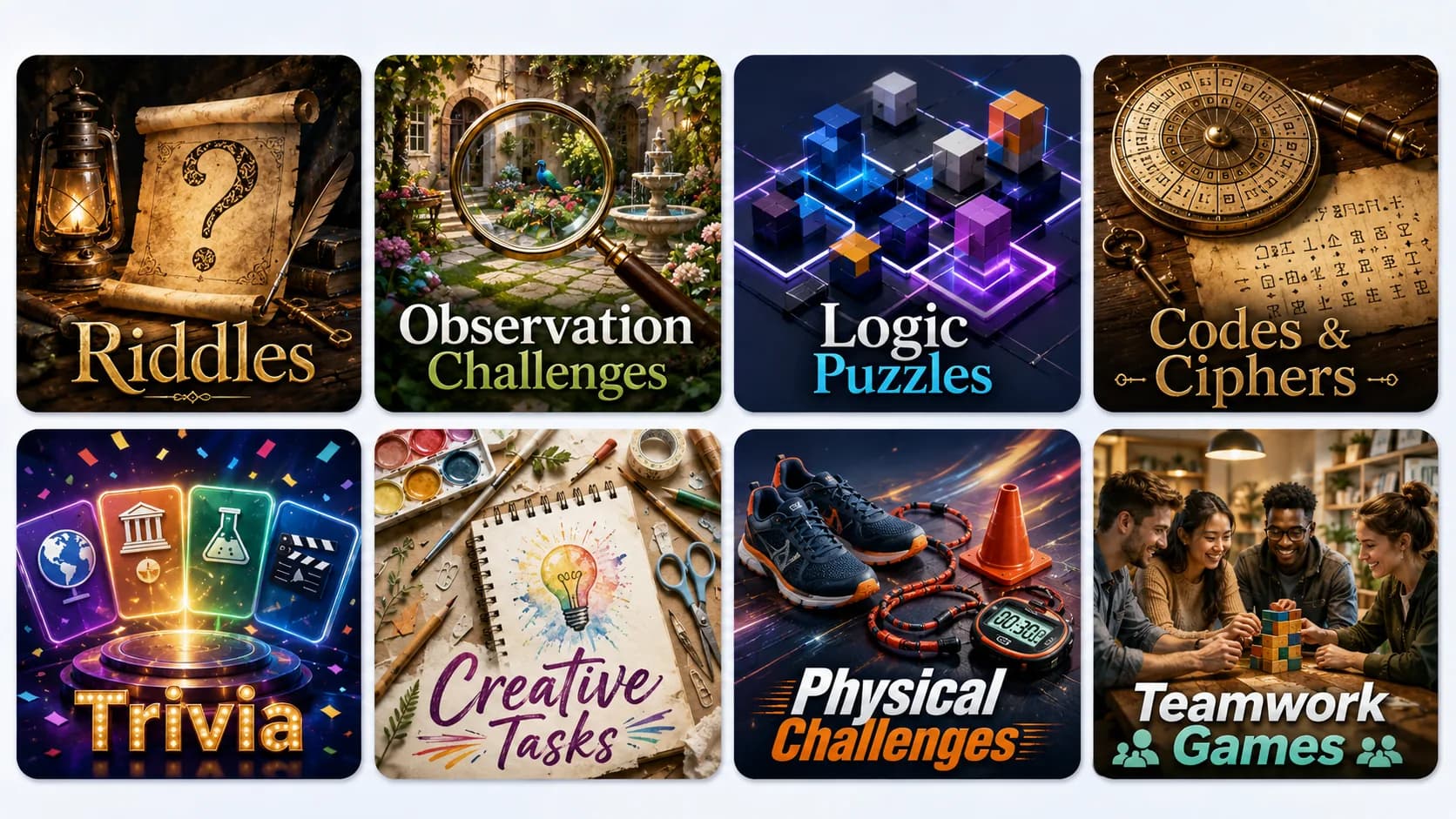
- Task types: simple riddles, observation, counting and a physical challenge between them
Clue ideas that work with small children
Children like clues they can physically do. Counting cushions, matching a paw print to a toy animal, following a string across the hallway, or finding the only red book on a shelf all beat a clever riddle nobody solves. The generator mixes these once you pick the kids audience.
Give the story a reason to exist. A lost puppy to find, a pirate captain who buried the party bags, a dragon who took the cake — small children will accept any premise as long as it explains why they are searching. Add their favourite film or dinosaur in the inspirations step.
- A paw-print trail leading to the toy animal that is holding the next clue
- Count the candles on the cake and use the number to pick the right numbered envelope
- A pirate map with three crosses, only one of which has the buried party bags
- An easy word puzzle where the first letters of four toys spell the next hiding place
- A jumping or balancing task between two thinking tasks to burn off energy
- A drawing task at the end: every child adds a creature to one shared treasure map
Keeping a group of children moving
Six children can hunt as one group; twelve cannot. Above eight, split into two teams with an adult each and start them at different tasks so they are not queuing behind the same cupboard. Read clues aloud for pre-readers rather than handing over the card.
Print the task cards on card stock if you have it, because paper does not survive twelve pairs of hands. Keep the host notes in your pocket, hide nothing above adult shoulder height, and check the last hiding place twice — the one clue that goes missing is always the final one.
How it works
- Choose a theme, then indoor or outdoor location.
- Set the audience, difficulty and how many tasks you want.
- Generate the scenario, tasks and host answers, and read the free preview.
- Pay once, then print the tasks or read the clues aloud.