Setting up a two-person quest
The five steps work the same way, but the answers are unusual. Friends is the closest audience preset for two grown-ups, and with a group of two there is no team splitting and no waiting turns; the difficulty can go to hard because there is no one to slow down for and no one getting bored at the back.
Location is where the design happens. A quest that runs through the flat you share reads differently from one that walks a partner across the city to the restaurant where you first ate together. Both work; the indoor version is easier to hide, the outdoor version makes a better evening.
- Theme: mystery, time travel or a custom scenario written around your own history
- Location: the home you share, or the city option with your own city name and a radius in km
- Audience: friends, with one player and one host — or both solving a trail you swap
- Difficulty: hard, since nobody is waiting for the slow team
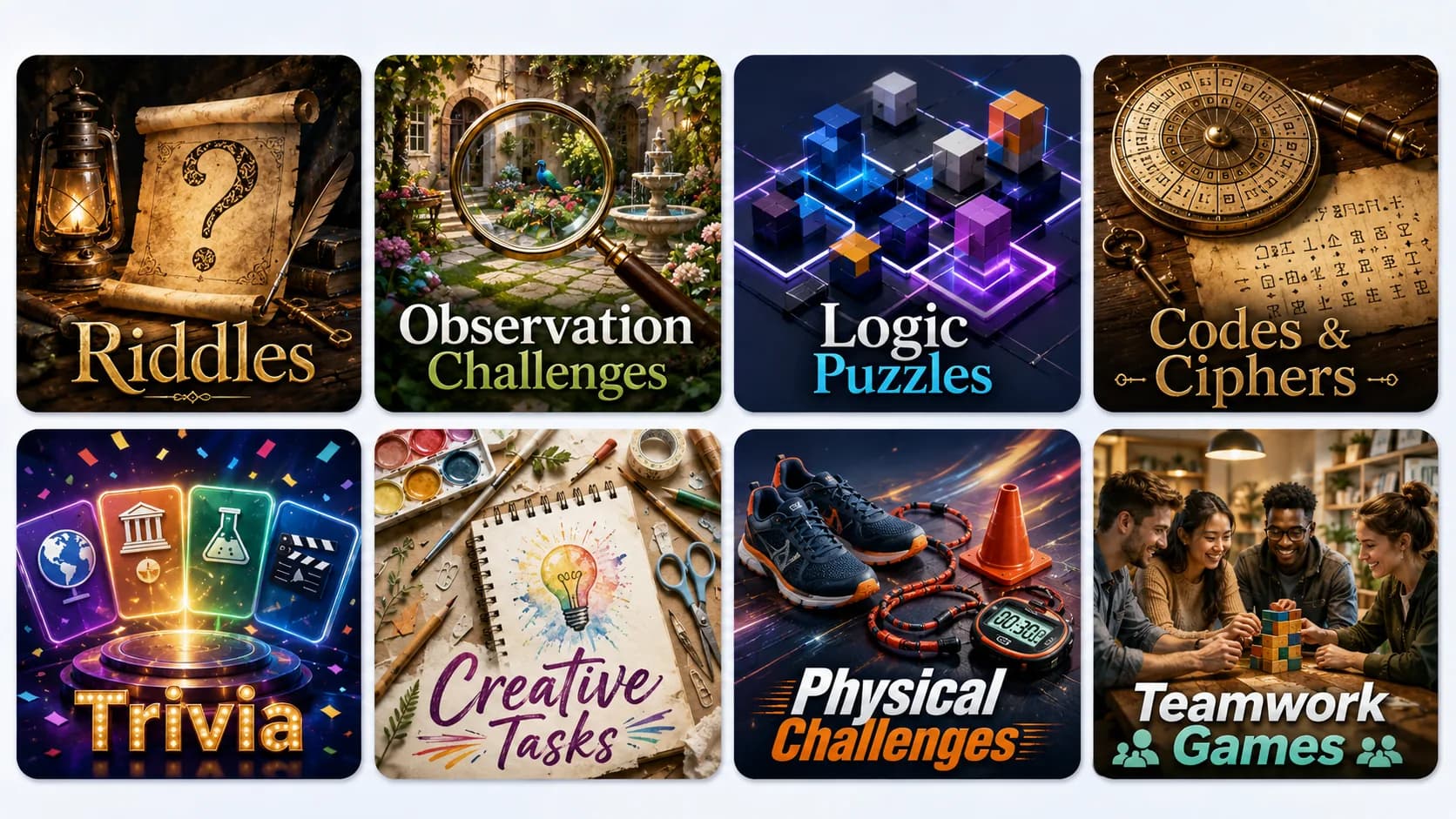
- Task types: riddles, code and cipher tasks and creative tasks rather than physical challenges
Clues built from your own history
The inspirations step is where an anniversary quest earns its keep. Feed in the year you met, the town, the terrible first flat, the song from the wedding, the holiday where the car broke down, and the clues come back referencing them instead of generic romance.
Most people end the trail on a gift or a booking. Because the tasks are numbered and the host notes hold every answer, you can hide the final envelope somewhere genuinely difficult and still be sure the hunt reaches it. Eight to ten tasks is enough for an evening.
- A riddle whose answer is the street where you first lived, leading to a photograph of it
- A cipher that decodes to the name of the restaurant where the table is already booked
- Task cards hidden in the order you visited cities together, oldest trip first
- A trivia round of five questions about the relationship, half of which you will get wrong
- A creative task: write the next year’s plan on the back of the final card
- A final clue inside the anniversary card, with the gift behind it
Making it work as a surprise
One of you has to be the host, which means reading the answers in advance and hiding the cards without being caught. Generate the quest a few days early, keep the host notes somewhere your partner does not look, and hide the physical clues while they are out.
If you would rather play together, generate two shorter quests and swap: each writes the inspirations for the other, then both run in the same evening. Printed cards suit this better than reading from a screen, and the scenario poster at $1 makes a keepsake once the evening is over.
How it works
- Choose a theme, then indoor or outdoor location.
- Set the audience, difficulty and how many tasks you want.
- Generate the scenario, tasks and host answers, and read the free preview.
- Pay once, then print the tasks or read the clues aloud.