Designing a card around a big number
The number should lead the design. Say which milestone it is in the prompt, add what the person is like, the decade they most identify with, and whether the card should be elegant, retro or openly mocking. The illustration is composed around that age instead of a generic birthday scene.
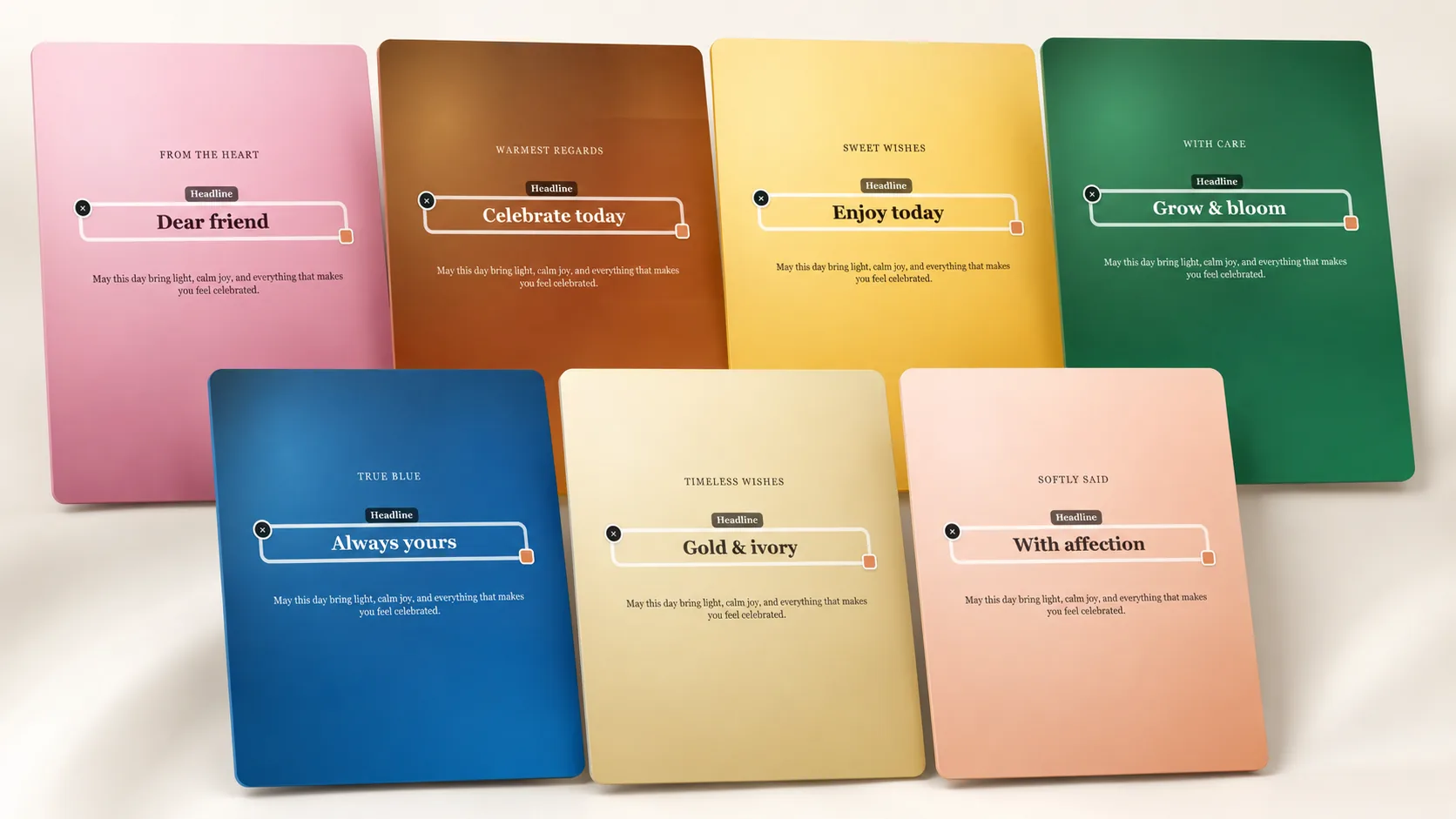
Template mode lets you set the number as the headline and write underneath it. Change the type size so the age dominates, pick colours that suit the party, and move the message block until the layout feels balanced. The watermarked preview shows how the number reads at full size.
- State the milestone age and the tone in the prompt
- Ask for a decade-specific style if the party has a theme
- Refine the AI illustration up to three times
- Set the number as the headline and write the message beneath it
- Print at A4 for a signing card or A6 for a card that travels in a bag
What to write in a 40th or 50th birthday card
Milestone cards usually pick a lane: gentle mockery about the age, or genuine recognition of the decade behind them. The strongest ones do both, opening with a joke and closing with something true. A single honest sentence after a punchline lands harder than three sentences of either on its own.
Ages carry different weight for different people. Some treat forty as a great excuse for a party, others would rather it passed quietly. If you are unsure, focus the card on what they have built rather than the number itself, and keep the age to the front of the design only.
- Forty looks considerably better on you than it has any right to
- Fifty years, and still the first person everyone calls
- Thirty: officially old enough to enjoy a quiet evening without apologising
- Sixty and busier than most people half your age
- For a quiet celebrant: a decade of doing things properly, congratulations
- A design direction: the number in oversized type with a small scene inside it
Big prints, group signing and party display
Milestone birthdays often mean a room full of people, which makes the larger sizes useful. A4 gives guests space to sign around the artwork, and the same file can stand on the gift table during the party and go on a wall afterwards. Heavier paper keeps the ink from bleeding when a crowd signs it.
A6 remains the practical choice for a card given privately or posted. If several friends want copies, the file can be printed as many times as you like after the single payment, and it stays available on the result page when someone asks for it again.
How it works
- Pick this occasion and choose AI mode or a ready template.
- Describe the card or edit the title, headline and message.
- Check the free watermarked preview and refine it if needed.
- Pay once and download a print-ready PNG in A6, A5, A4 or a custom size.